Showing posts with label Atlantic City. Show all posts

Wednesday, March 21, 2018

Looking at the 2018-19 State Aid Disparities

UPDATED STATE AID ANALYSIS IS HERE.

http://njeducationaid.blogspot.com/2018/07/2018-19-state-aid-disparities-narrow.html

THE FOLLOWING POST REFERS TO MURPHY'S ORIGINAL PROPOSAL BEFORE LEGISLATIVE MODIFICATION.

This post compares the proposed state aid levels of all New Jersey districts for 2018-19 with their Uncapped Aid levels.  By comparing actual Aid to Uncapped Aid we can see how stark New Jersey's state aid disparities are. 

While I am very disappointed and angry at the proposed distribution for 2018-19, at least the Murphy administration is attempting to follow some rational distribution of aid.  From 2013 to 2018 the Christie administration more or less flat-funded all districts, with the exception of those who participated in Interdistrict Choice.  For 2017-18, the Christie administration did not even initially calculate Uncapped Aid .

Although the Murphy administration describes itself as a 180 turn from the Christie administration in education policy, and that's the reality in a lot of ways, one thing the Murphy administration and Christie administration have in common is that they have no choice but to prioritize the state's debt payments.  As large as Murphy's $283 million increase in K-12 aid is, it is significantly smaller than the increase for teacher pensions, ie the Teachers Pension And Annuity Fund.

(Note, this does not include money from the lottery that is going to education)

See below for a definition of "Uncapped Aid."

The Scope of the Disparities:

The Big Picture:
There are 212 overaided districts with a total surplus of $708.7 million.  This is almost $70 million more than 2017-18, when the surplus was $643 million.  (I am excluding Interdistrict Choice aid)

The Murphy administration's proposed increase for the 171 of the 212 overaided districts is $28,604,340.
There are 380 underaided districts with a total deficit of $1.913 billion.  This is $52 million less than 2017-18, when the deficit was $1.965 billion.  (again, I am excluding Choice Aid, plus I am also excluding Atlantic City's Commercial Valuation Stabilization Aid, which is $32 million.)

If New Jersey could redistribute Adjustment Aid, the net deficit is only $1.205 billion.

Notes on New Jersey's State Aid Have-Nots
There are 75 districts getting 50% or less of their Uncapped Aid.

If the state wanted to prioritize this sub-50% districts, it would only cost $106 million to bring them all up to at least 50% funding, or less than one-seventh of the total excess aid that the overaided districts receive.

Chesterfield is, yet again, in in last place, getting only 21% of the state aid SFRA recommends for it. River Edge is the next lowest aided, getting 24%, then Hasbrouck Heights at 24.5%, Elmwood Park at 26%, and Robbinsville at 27%.

There are 43 districts whose deficit is larger than $4,000 per student.  To bring all of these districts up to a deficit of $4000 per student (which is still terrible) would require $155.7 million, which is about one-fifth of the state's excess aid.
(The $155.7 million number does include Atlantic City's Commercial Valuation Stabilization Aid)
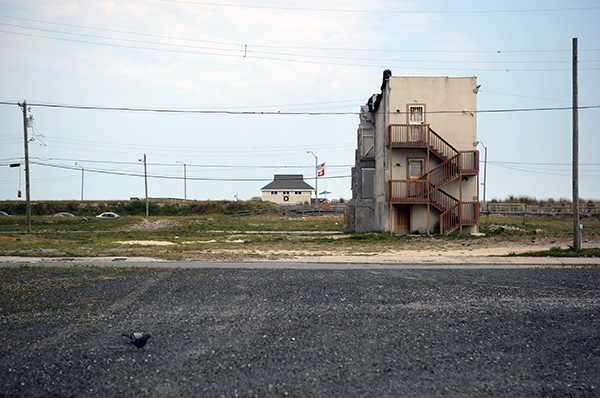
Atlantic City's Taxes are 287% of Local Fair Share. 
(+$52 million over LFS)
Phil Murphy's proposed budget will give Atlantic City $1.2
million in tax relief.

Bound Brook is the worst-off in deficit in dollars per student, at -$8,999 per student. Then Atlantic City (even with the $32 million CVSA), Manchester Regional, Fairview, and Freehold Boro.

Several vo-techs, like Atlantic County Vo-Tech, Cumberland Vocational, and Passaic County Vocational are also extremely underaided.

Atlantic City, has, by far, the worst taxes, with a tax levy at 287% of Local Fair Share. ($81,888,890 out of $29,396,657) 

Manchester Regional, up until his year, had the worst taxes, but its tax levy was in the low-200% rage of Local Fair Share. Manchester Regional's 2017-18 taxes are still at 219% of Local Fair Share, which is the second worst in New Jersey.

Newark's deficit is the largest in total dollars, $130,042,863.

Notes on New Jerseys' State Aid Haves

There are 68 districts getting 200% or more of what SFRA's real recommendation for them is is.  23 lucky districts get over 300%. Washington Township in Burlington County tops off the overaided districts, getting 563% of its aid target.

If the districts receiving 200% or more of their state aid got their aid reduced to "only" 200%, it would free up $76.8 million.

Tavistock is a non-operating district that claims three students living there.  It is getting $2299 on an aid target of $299, so it technically gets 1003% of its recommended aid.

Jersey City's Taxes are only 29% of Local Fair Share.
Jersey City is Gaining $1.8 Million in State Aid.
Deal, whose tax base is astronomically large, is getting $2,039,184 in Interdistrict Choice money, plus $200,045 in formula aid, on an aid target of only $187,443. That works out to 1195% of Local Fair Share, but I have decided to exclude Interdistrict Choice money from this analysis.


In total dollars, the biggest excess is Jersey City's, at $175 million. Powered by surging real estate and a little additional state aid from Phil Murphy, Jersey City's excess aid is up $24 million from its $151 million excess in 2017-18. Jersey City's school taxes are now only 29% of Local Fair Share.

Jersey City's excess aid is the ninth highest in dollars per student too, $5,716 per student. That's more than the total aid of its impoverished neighbors Guttenberg and Fairview get total!

Jersey City's Local Fair Share is $398 million. This is growth of $30 million in Jersey City's Local Fair Share in one year. This means that if Jersey City lost $30 million in state aid per year and made up for that loss with local taxes that its tax rate would not increase.

Also, Jersey City's Local Fair Share is growing at a rate where it will no longer qualify for Equalization Aid in 6-7 years.  Right now the Local Fair Share is $398 million, but once it reaches Jersey City's $590 million Adequacy Budget (for Equalization Aid) the only state aid Jersey City will qualify for will be the three categorical aids.

This means that even if Jersey City's Adjustment Aid is redistributed the state should still be able to use money currently going to Jersey City for needier school districts.

Hoboken's Local Fair Share is $217 million, which surpasses Edison to be the second largest in NJ after JC.
Hoboken's Local Fair Share is $217 million, the second largest
in NJ.  Hoboken's LFS is  $79,000
per student and yet it gets $10.5 million.
Hoboken's LFS per student is more than 2x Millburn's.

Pemberton's surplus state aid is $25,680,554, the second most in New Jersey.

Asbury Park is overaided by the most per student, with a surplus of $11,827 per student. That excess aid alone is more than what low-wealth non-Abbotts like Freehold Boro, Dover, Guttenberg etc get total for their students.

Loch Arbour is at 100%
Loch Arbor is the only district in New Jersey to get 100% of its Uncapped Aid: getting $3,944 for its 5 students, which is exactly SFRA's recommendation. (Since Loch Arbour's Local Fair Share is $1,301,988, it could give up all of its aid and not notice a thing.)

Abbott Specific Notes

The Abbotts are disparate. They range from Asbury Park and its mammoth $11,827 per student surplus to Plainfield, with its -$4,594 per student deficit (itself the 32nd largest in New Jersey).

For 2018-19 eleven Abbotts will be overaided, which is two fewer than the thirteen overaided Abbotts of 2017-18. The two Abbotts who slipped from overaided to underaided are Salem City and Burlington City. Their slippage, despite additional state aid, underscores how dynamic state aid is and that the deficit against Uncapped Aid constantly grows.

Only three of the Abbotts pay above their Local Fair Share (Burlington City, Salem City, and Phillipsburg)

The median Abbott only pays 56% of Local Fair Share. Hoboken's taxes are only 20% of Local Fair Share, despite having a levy that is extremely high in dollars-per-student.
  Lakewood
Lakewood is now overaided!

Lakewood actually has a rapidly growing tax base and its Local Fair Share increased from $92,974,112 for 2016-17 to $102,034,106 for 2017-18 to to $111,534,172 for 2018-19. During that time there has also been a decrease in the student population.

Thus, Lakewood's state aid deficit, which was $19 million for 2016-17, has increased to a small surplus of $1,566,821.

Although SFRA does not work for Lakewood and the district does require additional state aid, the district also has the ability to increase the tax levy in excess of 2% (which it has been doing).

Debt Takes Most of the Money

In a continuation of what happened under Christie, the state is putting much more money into various debt categories than it is putting into

See Also:


-----

Definition of Uncapped Aid:
Uncapped Aid = the real full funding for every school district. The term "Uncapped Aid" derives from the fact that SFRA contains legal "caps" on how much a district can gain in a single year, which are usually a 10% or 20% increase on what the district received the year before. Due to these caps, a school district's statutory "full funding" may differ greatly from what SFRA's formulas say it actually needs.

Uncapped Aid also refers to the amount of state aid that overaided districts would get if it were not for the mechanism of Adjustment Aid delivering over 100% of their state aid to them. In the case of Adjustment Aid districts, "Capped Aid" might more accurately be called the "pre-Adjustment Aid state aid target," but that is too wordy, so I just call it "Uncapped Aid" even though the aid caps do not apply to districts who are already getting over 100% of their recommended state aid.


Sunday, October 29, 2017

Atlantic City Should be an Abbott

In 1990, when the Abbott list crystalized, Atlantic City met the Supreme Court's two criteria for Abbottization, ie, status in DFG A or B and classification by the Department of Community Affairs as an "urban municipality."

Though Atlantic City was demographically poorer and more "urban" than
many districts who were Abbottized, Atlantic City was excluded from the Abbott list by Chief Justice Robert Wilentz himself due to its extremely strong casino-based tax base.

Exclusion from the Abbott list was something that Atlantic City could manage given how enormous its tax base was until the 2010s.

Throughout the 1990s and again in 2008 when its Equalized Valuation peaked at $22.2 billion, Atlantic City had the largest Equalized Valuation in New Jersey.   At its peak in 2008, Atlantic City's school tax rate was only 0.44 and yet it was able to sustain $17,600 per student in spending, a much higher amount than the South Jersey Abbotts like Vineland, Bridgeton, Millville, and Pleasantville.

Atlantic City remained a high-tax base district until the 2010s.

Then, unfortunately, other Mid-Atlantic states got the idea to open casinos, Atlantic City tourist numbers dropped, and Atlantic City's tax base started to implode.

In 2013 alone, the Borgata challenged its $2.3 billion assessment and got it down to $870 million.  Then, in 2015, the Borgota appealed again and got another lower assessment.

Then other casinos started to close altogether like the Sands, the Revel, Showboat, the Trump Plaza, and the Atlantic Club.  Atlantic City mayor Don Guardian predicted Atlantic City's valuation would stabilize around $7 billion.

As Atlantic City's casinos closed and the tax base collapsed, Atlantic City did not cut its tax levy proportionally and the tax rate soared and fell more heavily on residential homeowners.   By 2014-15 the school tax rate had risen from 0.44 to 1.1691. 

In 2015 Senate President Steve Sweeney said that Atlantic City should become an Abbott.
After hearing complaints from residents facing a huge hike in their property taxes, state Senate President Stephen Sweeney (D-Gloucester) today said that the state should consider sending more aid to Atlantic City schools. 
Sweeney, on a South Jersey radio call-in show, suggested making Atlantic City an “Abbott district,” which is named for a series of court cases in which the state Supreme Court said residents of New Jersey's poorest cities have a right to well-funded schools. 
“One of the other things that has to be looked at now is, with all these tax decisions does Atlantic City now qualify or deserve to be an Abbott district?” Sweeney said on the show, Pinky’s Corner. “When the casino revenues were high, no they didn’t qualify. But now the numbers have to look at, the picture has to be reevaluated. That would help the tax base in Atlantic City.”
In 2015 Atlantic City still had an above-average tax base (its Equalized Valuation was $11.3 billion, the seventh largest in NJ), so I disagreed with Sweeney at the time, but by now Atlantic City has fallen farther than even pessimists predicted and Abbott status is merited.

In 2014-15 Atlantic City's school tax rate had been 1.1691, but by 2017-18 it was 1.1911.  For 2018-19, if new state aid does not arrive and the tax levy stays constant at $82 million, the tax rate would be 1.86!  (1.86 = $82 million / $4.4 billion)

Demographics

The first reason Abbott status is warranted is that Atlantic City's demographics are among the most challenging in New Jersey.

Atlantic City's FRL-eligibility rate is in the bottom ten for New Jersey.

1.  Camden City, 95%
2.  Union City, 95%
3.  Seaside Heights, 94%
4.  Woodlynne, 93%
5.  Asbury Park, 93%
6.  Bridgeton,  93%
7.  Passaic, 91%
8.  Paterson, 90%
9.  Trenton, 89%
10.  Atlantic City, 89%

Tax Base

Atlantic City's tax base is well below the state's average, although it is not at the same ranking as its FRL-eligibility.

For 2017-18 Atlantic City's tax base is $8300 per student compared to the state median of $13,300 per student.   (AC = ($55.86 million in Local Fair Share for 6700 students).

That $8300 per student is low, but is only in the state's bottom quarter.

However, the 2017-18 Local Fair Share is based on Atlantic City's $6.4 billion in Equalized Valuation for tax year 2017.

Since then, the tax year 2018 Equalized Valuations have come out and Atlantic City's Equalized Valuation fell from $6.4 billion to $4.4 billion.  That $2 billion drop in Equalized Valuation should diminish Atlantic City's Local Fair Share by at least $14 million, or a 25% fall.

Since the 2017-18 Local Fair Shares are already out of date, I will calculate Equalized Valuation per student for the Abbotts.

This is the Equalized Valuation per student of all the Abbotts, plus Atlantic City.  Although Atlantic City's Equalized Valuation per student is still above the Abbott average, there are several Abbotts whose tax bases are superior and yet do not even have equivalent student poverty.

DistrictEqualized Valuation Per Student (based on tax year 2018 EV)
HOBOKEN$6,194,298
NEPTUNE TWP$1,111,837
LONG BRANCH CITY$950,114
JERSEY CITY$924,101
ASBURY PARK$703,676
ATLANTIC CITY$653,744
HARRISON$596,929
GARFIELD$559,809
BURLINGTON CITY$465,910
VINELAND$407,270
KEANSBURG$371,185
WEST NEW YORK$358,421
NEW BRUNSWICK$346,825
PEMBERTON$345,188
MILLVILLE$329,073
NEWARK$312,648
EAST ORANGE$309,757
UNION CITY$308,499
PERTH AMBOY CITY$301,569
CITY OF ORANGE TWP$298,012
ELIZABETH$289,422
PHILLIPSBURG$279,214
PLAINFIELD$277,555
GLOUCESTER CITY$272,747
IRVINGTON$262,452
PASSAIC$248,136
PATERSON$231,049
PLEASANTVILLE$205,939
TRENTON$165,947
SALEM CITY$135,244
CAMDEN$114,639
BRIDGETON$85,150

Implications of Abbottization?

It's hard to say what becoming an Abbott would mean for Atlantic City.  

SFRA created a unitary funding formula for K-12 aid, but preserved the Abbotts' rights to100% state funding for construction and 100% funding for PreK for all 3s and 4s in the Abbotts.

Due to SFRA's unitary formula for K-12 aid, Atlantic City's problem for K-12 aid isn't that it lacks Abbott status, it is that it is severely underaided anyway.  For 2017-18 SFRA already says that Atlantic City should get $79.3 million, but the state only gives it $56 million (which is $24 million in regular DOE money and another $32 million in "Commercial Valuation Stabilization Aid" which comes from other state agencies.)

Atlantic City already gets $3.3 million in PreK aid, which I can infer is much less than it would get if it were an Abbott.   

I do not know the size of Atlantic City's age 3 and age 4 cohort, but based on proportionality with the Abbotts, Atlantic City is not getting nearly enough PreK money for every child there.

For instance, Pleasantville, which has 3,000 fewer students than Atlantic City, gets $6.9 million in PreK money.  Millville, which has 1800 fewer students than Atlantic City, gets $8.5 million in PreK money.  Long Branch, which has 1600 fewer students than Atlantic City gets $9.8 million.  (source, DOE State Aid Summaries)

Keansburg has only 1400 students total and it gets $2.8 million for PreK.


Although Abbottizing Atlantic City doesn't seem to be on the table anymore, I hope it does come up because a conversation around Abbottizing Atlantic City might also inspire conversation about other updates to the Abbott list, including the deAbbottization of definitely Hoboken and perhaps Jersey City, Long Branch and Pemberton.  

Tuesday, March 14, 2017

Estimating Local Fair Share for 2017-18


Update: Local Fair Share, Capped Aid, and Uncapped Aid are now available. 

The following is moot.


After the Department of Education came out with 2017-18 state aid proposals I made an OPRA request of the Department of Education for 2017-18 Uncapped Aid and Local Fair Share.

I wanted Uncapped Aid so I could see what the total deficit is for the underaided districts, see what districts are the most underaided, see the total surplus for the overaided districts, and see what districts are the most overaided.

I wanted Local Fair Share so I could see whose taxes are the heaviest, whose taxes are the lightest, and what the median district in New Jersey pays.

I did not request Adequacy Budgets because spending relative to Adequacy is also determined by local tax effort and a focus on whose spending is above and below Adequacy can distract from state aid fairness.  Also, Adequacy Budgets are embedded into the calculation of Uncapped Aid anyway.

To my disappointment, the Department of Education said it did not calculate Local Fair Share and Uncapped Aid for 2017-18.  They did not give a reason, but my conjecture is that it was Christie who made the final decision not to bother with even the hypothetical operation of SFRA.

Nevertheless, the Department of Education did send me the components of Local Fair Share, which are Equalized Valuation (from the previous fiscal year, so 2016) and Aggregate Income (from three  years previous, so 2014).

The formula for Local Fair Share changes year to year, but by plugging in Equalized Valuation and Aggregate Income figures into the 2016-17 formula, I can ESTIMATE 2017-18 Local Fair Share and compare district tax bases.

This is the (first) formula for Local Fair Share used in 2016-17:

(Equalized Valuation x 0.013156218 + Aggregate Income x 0.046185507)/2

To see more about changes in Equalized Valuation between FY2016 and FY2017, please see this post of mine.

As usual, I've put the data online here.  2016-17 data, to which I make comparisons, is available here.

Yet again, these amounts are ESTIMATES - especially the year to year comparisons - since I have no idea what the multipliers should be in the 2017-18.


On the other hand, the relational comparisons between different towns should be very solid, since I am applying the same multipliers to every district for 2017-18.  If these calculations show that Hoboken's Local Fair Share is New Jersey's third highest at $195 million, I'd be surprised if the DOE's calculations give any different ranking, even if the exact Local Fair Share turns out to be something other than $195 million.

Hopefully the legislature will pressure Department of Education to simply run the formula so that the public may have a more informed conversation about state aid.

Anyway here goes:

  • Jersey City's Local Fair Share would increase by another $20 million to $353 million.  This is powered by a $4 billion increase in the Equalized Valuation  (to $25.7 bil) and a $502 million increase in the Aggregate Income (to $8 bil).

    Jersey City's Local Fair Share appears to be now 76% larger than the next largest district's, which is Edison at $200 million.  For 2016-17 Jersey City's Local Fair Share was "only" 60% larger than Edison's.
  • Hoboken's gained $1.8 billion in Equalized Valuation and $357 million in Aggregate Income.  Whatever the exact  Local Fair Share formula ends up being, Hoboken's Local Fair Share would likely be around  $195 million and be the third largest in New Jersey, after Jersey City and slightly behind Edison.  This year Hoboken's Local Fair Share surpasses Toms River's.

    Hoboken's 2016-17 tax levy was only $42 million, so for 2017-18 Hoboken's taxes will be barely a fifth of Local Fair Share

    For the last year pro-reformers in the legislature have pushed to eliminate Adjustment Aid, but there are certain low-student population districts such as Hoboken, some wealthy enclaves like Alpine and Harding, and many Jersey Shore resort towns who have no need for any state aid whatsoever.  
  • There is also increases in other Hudson County towns, powered by non-Hoboken/non-Jersey City Hudson County's $5 billion increase in Equalized Valuation.  West New York's would be $4 million larger, driven by 10% increases in Equalized Valuation and Aggregate Income.

    Union City, Bayonne, North Bergen, Harrison, Kearny, and others would have small increases (the small increases might be smoothed away if the DOE actually ran the formula)
  • Asbury Park's Local Fair Share would actually shrank (by a tiny amount). That's outrageous, since Asbury Park is undergoing a building boom. Asbury Park is just as much an example of the exploitation of the PILOT law as Jersey City is.  
  • Atlantic City's Local Fair Share fell by another $13 million, from $65 million to $52 million.  This is due to the loss of another $2 billion in Equalized Valuation and $8 million in Aggregate Income.

    Atlantic City's school tax levy for 2016-17 was $82 million, so Atlatic City's taxes may be 157% of Local Fair Share.

  • Manchester Regional's taxes are likely the state's highest again.  My estimate is that Manchester Regional's Local Fair Share is only $4.9 million, so the $10.9 million (which falls disproportionately on Prospect Park and Haledon due to Manchester Regional's unique tax-apportionment scheme) is absolutely brutal.
  •  
  • Newark's Local Fair Share may have grown slightly, by $6 million, from $161 million to $167 million. (Newark's actual tax levy is $123 million)
  • Paterson's Local Fair Share may have grown slightly too, by $3 million, from $85 million to $88 million (Paterson's actual tax levy is only $41.5 million)

Again, the above figures are only ESTIMATES, but I hope this post generates discussion, particularly regarding Hoboken and Jersey City's state aid and the acute tax crisis in Atlantic City.

Please ask your legislators to demand that the Department of Education do these calculations for real.

At the very least, we have to know  what the total deficit is for the underaided districts.  For 2016-17 it was $1.93 billion, which is far beyond any realistic tax increase.  This deficit number is a critical point in the argument for why redistribution is necessary.

----

See Also:

Monday, September 7, 2015

Should Atlantic City become an Abbott? Short Answer: No.

This post was accurate at the time it was written. Since then Atlantic City's property tax base has fallen farther than anyone imagined and I think Abbottization is more than merited.

See http://njeducationaid.blogspot.com/2017/10/atlantic-city-should-be-abbott.html


Long Answer: Below

The collapse of the gambling industry in Atlantic City has caused an absolutely massive loss of property wealth and taxing capacity.

Eight or nine years ago, casinos owned 85 percent of Atlantic City's real estate, based on assessed values, Mayor Don Guardian said last week. Now, they account for about 55 percent of the assessed values and are expected to keep falling, he said....
A 2007 revaluation boosted the assessed value of all Atlantic City real estate to $20.5 billion from $8.2 billion, with casinos accounting for the bulk of the increase. But since 2010, appeals by casinos hurt by sagging revenue have gutted the tax rolls, which totaled just $11.3 billion in 2014, according to Atlantic County Board of Taxation records
"We're going to continue to spiral down with assessed values, probably more than $3 billion this year. We're eventually going to get down to $7 billion before we level off," Guardian said of the city's overall assessments.
Casinos' assessments have plummeted since 2010 from about $15 billion to less than $6 billion, based on values won on appeals. For example, New Jersey Tax Court in October 2013 slashed Borgata's 2010 assessment to $870 million from $2.3 billion....
The collapsing value of casinos has forced a massive shift in taxes to residents, who for years benefited from the flow of out-of-staters' gambling losses into the city's coffers.
But they're now feeling the pinch as those tax dollars stay in neighboring states that now have gambling, and they've seen their property taxes increase by more than 50 percent in the last two years.
Guardian said he would bring expenses in check so the rise in rates ends.
"The people that are left, the property owners that are left, cannot pick up any more of this cost," Guardian said.

The loss of valuation has been dramatic. In 2007 Atlantic City had the second highest equalized property evaluation in New Jersey (after Jersey City) Now Atlantic City's valuation has fallen to about the seventh highest, behind towns like Toms River and Edison.

Although Atlantic City's schools have always been in DFG A and the students have have an 89% FRL-eligible rate, Atlantic City has never been an Abbott because its local resources were so exceptionally high.  Back at the peak of the casino industry in 2007 Atlantic City had more than $3 million in valuation per student, a figure much higher than what Millburn and Princeton have.

Now, in the wake of multiple casino closings in Atlantic City and the destruction of Hurricane Katrina, the been some talk about making Atlantic City the 32nd Abbott district:

The idea hasn't gone far, but it is supported by Senate President Steven Sweeney:

After hearing complaints from residents facing a huge hike in their property taxes, state Senate President Stephen Sweeney (D-Gloucester) today said that the state should consider sending more aid to Atlantic City schools. 
Sweeney, on a South Jersey radio call-in show, suggested making Atlantic City an “Abbott district,” which is named for a series of court cases in which the state Supreme Court said residents of New Jersey's poorest cities have a right to well-funded schools. 
“One of the other things that has to be looked at now is, with all these tax decisions does Atlantic City now qualify or deserve to be an Abbott district?” Sweeney said on the show, Pinky’s Corner. “When the casino revenues were high, no they didn’t qualify. But now the numbers have to look at, the picture has to be reevaluated. That would help the tax base in Atlantic City.”

Sweeney made the same proposal again in December of 2014.

Sweeney, however, said he thought Atlantic City schools were entitled to more aid. The district has long met every social criterion for funding under the state’s former Abbott program. The revenue from the casinos, however, disqualified the district from the program.

Sweeney has a complex proposal for Atlantic City where the casinos would pay a special PILOT instead of property taxes, Under Sweeney's proposal the Atlantic City schools would receive a special category of aid called "commercial valuation stabilization Aid."


I have a lot of sympathy for Atlantic City, but it still should not be an Abbott district.

Even after it's huge loss of property valuation Atlantic City still has $1.58 million in property valuation per student. (11,535,956,503 / 7300 = $1.58 million) It has a 1.1691 tax rate, which translates into a still extremely high $20,826 in per pupil spending, higher than most of the Abbotts.

Compare Atlantic City's valuation per student to the valuation per students of other high-poverty non-Abbotts:


  • Prospect Park: $200,000 per student (Adjusted for it being a K-8)
  • Freehold Boro: $400,000 per student (Adjusted for it being a K-8)
  • Dover: $430,000 per student
  • Guttenberg: $570,000 per student (Adjusted for it being a K-8)
  • Belleville: $595,022 per student
  • East Newark: $325 per student (Adjusted for it being a K-8)


Even if Atlantic City's valuation fell to $7 billion, as Mayor Tom Guardian predicts, it would still have almost $1 million in valuation per student -- a relatively strong tax base. Although the drop to $7 billion is possible, the government is not supposed to distribute money now based on need that may exist in the future.

If Atlantic City became an Abbott it doesn't automatically mean that Atlantic City would get the $15,000 per student amounts that Jersey City, Elizabeth, Newark, Camden etc get, but it would give Atlantic City other special privileges, like guaranteed full SFRA funding, 100% facilities funding from the state, and state-funded Pre-K. Although poor Atlantic City children need Pre-K, so do poor children in numerous other high-poverty districts, such as Lakewood, Dover, Red Bank Boro, Freehold Boro etc and I do not comprehend why Atlantic City's poor children should be ahead in line of poor children elsewhere. As it is, Atlantic City already has more free Pre-K than most non-Abbotts and is getting more.

Atlantic City may need help, but even in a worst-case scenario it would still have more property wealth that most other high-poverty districts. There is no rationale reason to allow Jersey City to cut in line many districts that are still lower-resource than it.  This isn't to say that Atlantic City doesn't need help, but the solution should be through respecting SFRA and directing more money through it to needy districts.

Then, there is the issue that New Jersey shouldn't have a class of districts given special privileges by the New Jersey Supreme Court in the first place. There is a continuum of need in New Jersey and the Abbott decision, by giving several major special privileges to the Abbott plaintiffs and not to many districts that are in fact as poor or poorer than they are, has been a mistake and cause of gross unfairness.